


My Town : Hospital
4.2203.00 Reviews
App Specs
- Version
- 7.03.09
- Updated On
- License
- $4.49
- Downloads
- 100,000+
- Developer
- My Town Games Ltd
- Categories
- Educational
- Platform
- Android
Screenshots
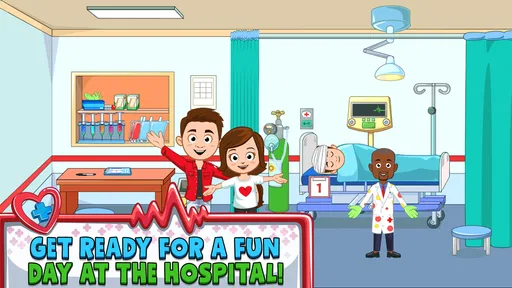
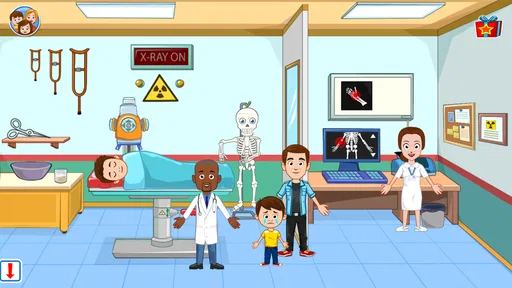
 Analysis by AppCompare
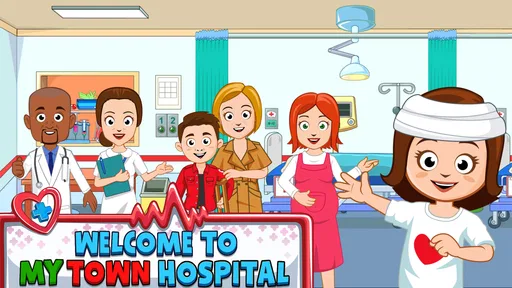
I approached My Town : Hospital as a small, open-ended play space rather than a lesson with fixed answers. That distinction matters. This is an educational game from My Town Games Ltd built around exploring a hospital, moving between rooms, and using characters to create your own situations. In my experience, its value comes from pretend play: a child can decide what is happening, act it out, and change the story whenever curiosity takes over.
The idea is easy to understand, but choosing it still depends on what you want from a children’s game. If you are looking for a calm activity that encourages storytelling and familiarizes a child with a hospital environment, it has a lot going for it. If you want spelling practice, arithmetic drills, formal medical lessons, or a clearly guided progression system, this is not the right category. It feels closer to a digital dollhouse set in a hospital than to a traditional teaching tool.
What I looked for before recommending it
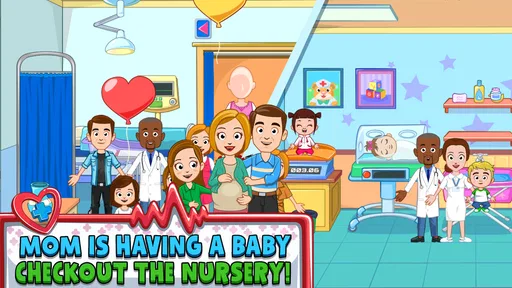
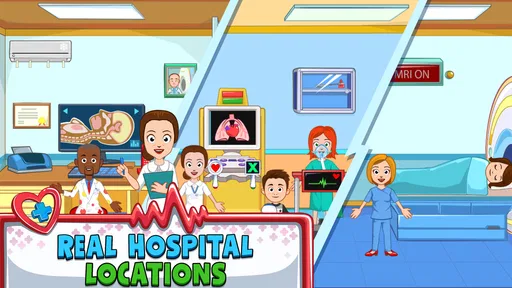
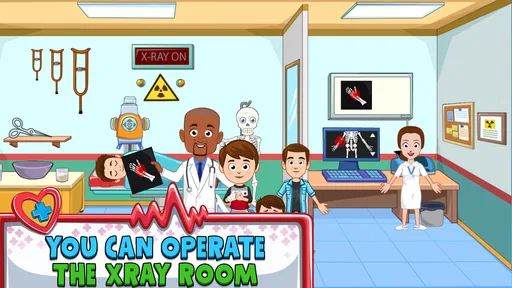
My first decision criterion was whether the hospital setting would support more than a quick novelty visit. It does. The rooms and characters give children several ways to build scenes: a routine checkup, a worried family member waiting nearby, a doctor examining someone, or a more imaginative story that has nothing to do with a real emergency. The setting supplies enough context for role-play without forcing one correct storyline.
The second criterion was accessibility. The game is rated Everyone, and the basic concept is immediately readable even for a child who has never played a My Town title. There is no complicated objective to explain. I could hand over the device, point out the rooms and characters, and let the child experiment. That low entry barrier is one of its strongest qualities for younger players who may become frustrated by menus, instructions, or timed challenges.
I also considered whether the hospital theme would be comfortable for every family. The setting can help children process an upcoming appointment by turning unfamiliar surroundings into something they can explore safely. At the same time, a hospital can be an emotionally sensitive subject. A child who has recently experienced a frightening visit may not find this kind of play relaxing. I would introduce it gently, watch the reaction, and avoid presenting it as preparation for a real medical procedure.
The game is available for $4.49, with optional in-app items priced at $0.99 per item. That makes the purchase decision different from choosing a free game supported by interruptions. I would still check the store controls and device settings before letting a child play independently, especially if the device is shared. The important point is that the initial price should be judged against the intended use: a short-lived distraction may not justify it, while repeated imaginative play may.
Its audience is also broad in a practical sense. The age classification is Everyone, and the game runs on Android devices using version 8.0 or later. The current version is 7.03.09. Those details are useful when deciding whether an older family phone or tablet can handle the installation, but compatibility is only part of the experience. A larger screen is generally more comfortable for moving characters around and noticing what each room offers.
Worth Reading Before You Choose

EA SPORTS FC Mobile 26 Is a Bigger Football Game, but It Takes Time

Flipboard Shows What News Apps Must Do Beyond the Feed

Switching to Android Auto Means Rethinking Your Driving Routine

Google Calendar Makes a Crowded Week Easier to Manage

Ludo King Makes the Most of the Minutes Between Plans

Baby Panda World Brings Quick Play to Modern Phones, but Its Game Library Feels Busy
Why the open-ended format works
What I enjoyed most is the absence of pressure to finish a level. In a conventional educational game, a child may learn by answering questions, earning points, and moving forward. Here, learning is less visible. Children practice sequencing, conversation, emotional expression, and social roles while they invent a situation. They may decide who needs help, who waits, who explains what is happening, and how the scene ends.
That makes it especially useful for shared play. An adult can ask, “What should happen next?” instead of taking control of the story. One child might play the patient while another plays the doctor, then they can swap roles. If a child plays alone, the same room can become a setting for several different stories. I found that flexibility more valuable than a simple collection of decorative hospital objects.
A practical tip is to begin with a small scenario rather than opening every room at once. For example, start with a patient arriving, move through a basic examination, and finish with a recovery scene. This gives younger children a sequence to follow while preserving freedom. Later, add a second character or an unexpected problem. The game works best when the adult supplies prompts, not answers.
Another useful approach is to use it as a conversation starter before an ordinary appointment. I would not promise that the game mirrors a real hospital, because pretend play simplifies reality. Still, acting out waiting, asking questions, and receiving help can give a child language for discussing feelings. The benefit comes from talking during play, not from treating the game as medical instruction.
Where this hospital setting is stronger than usual alternatives
Compared with puzzle-based educational games, this one gives children more control over the meaning of an action. There is no need to select the correct answer before continuing. A child can pause, rearrange the scene, repeat a conversation, or abandon one idea and start another. That is a better fit for imaginative children who lose interest when a game marks every response as right or wrong.
Compared with general dress-up or dollhouse apps, the hospital theme adds a useful framework. It naturally introduces roles, routines, care, and cooperation. The setting can lead to discussions about kindness, patience, privacy, and asking for help. Those themes are not delivered as formal lessons, but they arise more easily here than in a completely open room with no setting.
The game also has an advantage over physical hospital playsets when a family wants quick setup. There are no small pieces to gather, no room to clear, and no risk of losing a tiny accessory under the sofa. A child can move from one imagined scene to another without rebuilding a physical layout. On the other hand, physical play offers tactile movement and shared space that a screen cannot replace, so I see this as a companion rather than a substitute.
Its audience response suggests that the concept has found a real niche: it holds an average rating of 4.2 from around 1.9 thousand ratings, and the game has passed 100 thousand installs. I would treat those figures as signs of interest rather than proof that every child will enjoy it. Open-ended games divide families more sharply than goal-driven ones. Some children become absorbed in inventing stories; others ask what they are supposed to do after a few minutes.
Specific ways I would use it at home
One realistic everyday use is a quiet transition after school. Instead of asking a tired child to complete a structured worksheet, I would offer a short hospital story and invite them to choose the first character. The child can play independently while I prepare dinner, then tell me what happened. This works because the game does not demand constant success feedback, although I would still set a clear stopping point so the open-ended format does not turn into endless screen time.
A second use is cooperative storytelling with a sibling. I would give each player a role and a simple responsibility: one person moves the patient, the other decides what the staff member says. The rule should be that nobody changes another player’s scene without asking. This turns the game into practice for turn-taking and negotiation, which is a more meaningful benefit than simply tapping through rooms.
A third use is language practice. An adult learning English with a child can name rooms, describe actions, and build short dialogues around the characters. The hospital context supplies repeated vocabulary without requiring a separate flashcard session. I would keep the conversation natural and avoid turning every moment into a test. If the child is bilingual, the same scene can be acted out in both languages.
There is also a helpful storytelling technique for children who become overwhelmed by too many choices. Choose one character, one room, and one problem. The problem might be that someone is nervous, has to wait, or needs to find another person. Once the child has completed that small story, add another room. This gradual approach makes the game feel less scattered and reveals more of its educational value.
Limitations that should affect your choice
The biggest limitation is that the game does not provide a conventional learning path. A parent expecting measurable progress in reading, numbers, or science may feel that the activity is too loose. The educational value depends heavily on how the child plays and whether an adult joins in with useful questions. For independent academic practice, a focused learning app will usually be a better choice.
Open-ended play can also become repetitive. Once a child has explored the rooms and established favorite roles, the novelty may fade. Some children will keep inventing variations; others will need a prompt from a parent or sibling. I would not buy it expecting a fixed number of hours of entertainment. Its longevity depends on the child’s interest in pretend play, not on a long sequence of unlockable goals.
The hospital theme is another trade-off. It is excellent for role-play about care and reassurance, but it may be a poor fit for a child who dislikes medical imagery or has a difficult association with hospitals. In that situation, a general town, home, or school setting would be gentler. The Everyone rating describes the intended content level, but it cannot predict an individual child’s emotional response.
The paid model may also influence the decision. A one-time purchase is straightforward, yet optional purchases can complicate a device shared with children. I would make the purchase rules clear before play and avoid presenting extra items as necessary for enjoyment. The core appeal is the hospital setting and the freedom to create scenes; a child should not feel that every interesting possibility depends on spending more.
There are also ordinary screen-play concerns. The game is engaging precisely because it invites repeated manipulation of characters and rooms, so it can be difficult for a young child to stop without warning. I recommend using it within a simple routine: play after a particular task, set a timer outside the game, and give a short warning before closing. That advice is not a flaw unique to this title, but the absence of natural levels means the parent must provide the stopping structure.
How it compares when you are choosing between categories
If your alternative is a worksheet or quiz app, choose the worksheet when you need a clear academic target and visible completion. Choose this game when your priority is conversation, imagination, and social role-play. Neither approach replaces the other. A child can practice counting in one app and then use a hospital scene to invent a story about who is waiting and what happens next.
If you are comparing it with a broad virtual town, this title is more focused. The hospital gives every scene a recognizable purpose, which helps children who need a starting point. A broader town may offer more varied settings, but it can also leave a younger player unsure how to begin. I would choose the hospital for a child interested in doctors, nurses, patients, or caring for others, and a general town game for someone who wants many unrelated story themes.
If the choice is between this and a medical reference app, the difference is fundamental. This is pretend play, not a source for diagnosing symptoms or explaining treatment. It can support a conversation about feelings and routines, but adults should answer health questions with reliable real-world information. For older children seeking factual anatomy or science content, a dedicated educational resource is the more suitable option.
Physical toys may be better when several people want to play together away from a screen or when a child benefits from hands-on movement. This digital version wins on convenience and quick scene changes. I would choose based on the moment rather than insisting on one format: use the app during travel or a quiet indoor period, and use physical play when the family has space and time to build a larger shared story.
What the purchase changes in practical use
Paying for the game makes most sense when the child already enjoys role-play and is likely to return to the hospital setting. Before buying, I would watch how they respond to similar pretend situations with toys or books. If they create long conversations and change roles willingly, this format is a promising match. If they only enjoy games with points, challenges, and immediate rewards, the purchase may feel disappointing.
I would also consider who will play with it. For a family that wants an occasional independent distraction, the price may be harder to justify than for a household using it for shared storytelling, language practice, or appointment preparation. The strongest value is not a single session. It is the ability to reuse the same setting for different conversations and social situations.
To get more from it, I would create a small rotation of prompts: “Who needs help today?”, “What does the patient want to ask?”, “Who is waiting?”, and “How can the characters make the situation calmer?” These questions keep the play fresh without turning it into a lesson. They also reveal whether the child is engaging with the setting creatively or simply moving objects around.
One trade-off is that adult involvement improves the educational payoff but reduces the game’s role as a fully hands-off activity. A child can explore alone, but the deeper benefits—language, empathy, sequencing, and discussion—usually appear when someone listens and responds. Families should be honest about that. This is not necessarily a problem, but it changes what you are buying: a flexible play tool, not an automatic tutor.
My recommendation for the right kind of player
I recommend My Town : Hospital to younger players who enjoy making up stories, moving characters through familiar situations, and exploring without a score. It is particularly appealing when a family wants a gentle way to discuss care, waiting, feelings, and cooperation. The Everyone rating, simple premise, and focused setting make it approachable, while the open format leaves room for a parent or sibling to add depth.
I would skip it for a child who needs structured academic exercises, a clear reward system, or a large variety of unrelated environments. I would also look elsewhere if the hospital theme could cause distress, or if the family wants a game that remains satisfying without any adult prompts. In those cases, a focused learning app, a broader pretend-play setting, or a physical toy may fit better.
After using it, my view is that its best feature is not the hospital label itself but the way the setting gives purpose to imaginative play. It turns a screen into a place where children can rehearse conversations, invent routines, and explore caring roles at their own pace. That is a real educational benefit, even though it does not look like a lesson.
For me, the purchase is worthwhile when the child already responds well to pretend play and the family is comfortable setting boundaries around optional items and screen time. It is less convincing as a standalone teaching solution. Think of it as a reusable storytelling kit with a hospital theme, and the decision becomes much clearer: choose it for guided imagination, not formal instruction.
Pros
- Colorful
- child-friendly graphics make the hospital easy to explore.
- Many rooms and characters encourage imaginative role-playing.
- Simple touch controls are suitable for younger children.
- Open-ended play allows children to create their own stories.
- Works well for short
- casual play sessions without strict goals.
Cons
- Some areas and characters may require additional purchases.
- The lack of structured tasks can feel repetitive over time.
- Frequent tapping and dragging may be difficult on smaller screens.
- Limited educational guidance reduces its value as a learning tool.
- Performance may vary on older phones or tablets.
FAQs for My Town : Hospital
What is My Town: Hospital, and what can children do in the game?
My Town: Hospital is a digital role-playing and storytelling game designed around a friendly hospital setting. Children can explore different rooms, including examination areas, treatment spaces, and other medical facilities, while interacting with characters and objects. The focus is on imaginative play rather than competition, allowing players to create their own stories about doctors, nurses, patients, families, and everyday hospital situations.
Is My Town: Hospital suitable for young children?
The game is generally aimed at young children who enjoy open-ended pretend play, particularly preschool and early elementary-age players. Its colorful presentation and simple interactions make it easy to explore without complicated controls. However, parents should still review the age rating, available features, and device settings before downloading, since suitability can vary depending on a child’s age, sensitivity to medical themes, and familiarity with in-app purchases or advertisements.
Does My Town: Hospital require an internet connection to play?
My Town: Hospital is primarily designed as an interactive offline-style experience, so many of its main activities can usually be enjoyed without a constant internet connection once the necessary content has been installed. An internet connection may still be required for the initial download, updates, restoring purchases, or accessing certain platform services. Availability of specific features can differ between Android and iOS versions.
Are there in-app purchases or advertisements in My Town: Hospital?
Before downloading, parents should check the current store listing because monetization details can change between versions and platforms. My Town games may include optional purchases, additional content, or promotional elements depending on the edition. The core role-playing experience is intended to be accessible and simple, but adults should review device parental controls and purchase authentication settings to prevent accidental transactions while children are playing.
Does My Town: Hospital support multiple characters and creative storytelling?
Yes, the main appeal of My Town: Hospital is its freedom to create personal stories using different characters, locations, clothing, and interactive objects. Players can act out checkups, emergencies, family visits, or completely imaginary scenarios without following a strict mission structure. The game encourages experimentation and replayability, although the amount of available content and character customization may depend on the installed version and any optional purchases.


